
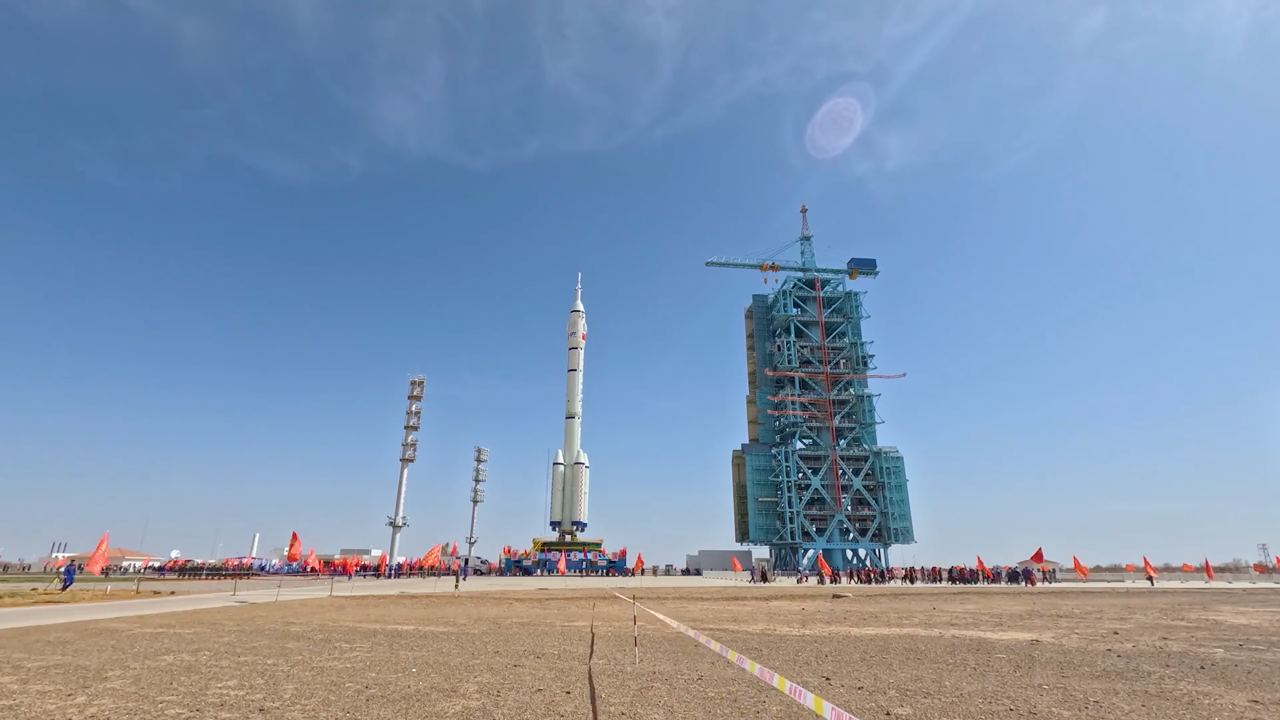
The Shenzhou-24 mission represents a significant milestone in China’s space exploration efforts, showcasing new crew dynamics and technological advancements.
Overview of the Shenzhou-24 mission
The Shenzhou-24 mission marks a significant achievement in China’s space exploration efforts, showcasing the nation’s technological advancements and commitment to establishing a permanent presence in low Earth orbit. Launched on a historic date, this mission has garnered attention for its ambitious objectives and the experienced crew onboard.
The primary goals of the Shenzhou-24 mission include:
- Transportation of astronauts: The mission successfully transported a diverse crew of astronauts, including seasoned veterans and newcomers, to the Tiangong space station.
- Scientific research: A range of experiments are being conducted in microgravity, aimed at advancing knowledge in fields such as medicine and materials science.
- Technological testing: The mission serves as a platform to test new technologies that will be essential for future deep space exploration.
With the Shenzhou-24 mission, China continues to solidify its position as a key player in the global space community, pushing boundaries and setting new milestones in human spaceflight.
Key milestones achieved during the mission
The Shenzhou-24 mission has marked a significant advancement in China’s space exploration efforts. Several key milestones have been achieved during this mission, showcasing the capabilities of the crew and the technology involved.
- Launch Success: The mission successfully launched on time, demonstrating the reliability of China’s launch vehicles.
- Docking Operations: The spacecraft completed automated docking with the Tiangong space station, a critical step for future missions.
- Scientific Experiments: The crew conducted over 20 scientific experiments in fields such as biology, materials science, and astronomy, contributing valuable data for future research.
- Extravehicular Activities: The astronauts performed multiple spacewalks, successfully installing new equipment on the station’s exterior.
- International Collaboration: The mission fostered new partnerships, with scientists from different countries participating in joint experiments.
- Training Innovations: The crew utilized advanced training techniques, enhancing their preparedness for unexpected challenges.
These achievements not only highlight the success of the Shenzhou-24 mission but also pave the way for future endeavors in space exploration.
Technology advancements in space exploration
The Shenzhou-24 mission has marked a significant advancement in technology related to space exploration. This mission has not only expanded China’s capabilities but also set new benchmarks for future endeavors.
One of the key technological achievements during Shenzhou-24 is the enhanced life support systems, which ensure a sustainable environment for astronauts. These systems have been meticulously designed to recycle air and water, showcasing China’s commitment to long-duration space missions.
Additionally, the spacecraft’s navigation systems have seen remarkable improvements, allowing for more precise docking with the Tiangong space station. This advancement is crucial for future missions that aim to establish a permanent presence in low Earth orbit.
Furthermore, the communication technology utilized in the Shenzhou-24 mission has been upgraded to provide real-time data transmission and better connectivity with ground control. This ensures that astronauts can maintain constant communication during their missions.
Ultimately, the Shenzhou-24 mission exemplifies how technological innovations can propel space exploration forward, laying the groundwork for ambitious projects that lie ahead.
As China continues to push the boundaries of space technology, the achievements of Shenzhou-24 will undoubtedly influence future missions.
Meet the new crew members
The Shenzhou-24 mission has introduced an exceptional crew that is set to push the boundaries of space exploration. This mission features a diverse team of astronauts, each bringing unique skills and experiences to the table.
- Commander Liu Wei: With multiple spaceflights under his belt, Liu is known for his leadership and expertise in orbital mechanics. He aims to enhance the mission’s operational efficiency.
- Flight Engineer Wang Fang: As a veteran of previous missions, Wang specializes in robotics and is responsible for conducting experiments that require precision and technical skill.
- Payload Specialist Zhang Li: A newcomer to space travel, Zhang brings fresh perspectives and innovative approaches to scientific research, focusing on biological experiments that could benefit future missions.
Each crew member has undergone rigorous training in preparation for the Shenzhou-24 mission, ensuring they are fully equipped to tackle the challenges of living and working in space. Their collaborative spirit and commitment to excellence are expected to lead to groundbreaking discoveries, further solidifying China’s position in the field of space exploration.
Future of China’s space program
The future of China’s space program looks promising, particularly in light of the recent successes of the Shenzhou-24 mission. As China continues to expand its capabilities in space exploration, several key areas are expected to see significant developments.
- International Collaboration: Future missions may involve partnerships with other countries, promoting a global approach to space research and exploration.
- Advanced Technology: Continued investment in cutting-edge technology will be vital, enabling China to develop new spacecraft and enhance existing systems.
- Moon and Mars Missions: Plans for lunar and Martian exploration are on the horizon, with the potential for crewed missions in the coming years.
- Space Station Development: The construction and operation of the Tiangong space station will remain a focal point, supporting long-duration missions and international scientific cooperation.
- Public Engagement: Strengthening public interest and education in space science is crucial, fostering the next generation of scientists and engineers.
As the Shenzhou-24 mission has demonstrated, China is well on its way to becoming a major player in the global space arena, paving the way for exciting advancements and discoveries.
By 中国新闻社 via Openverse