




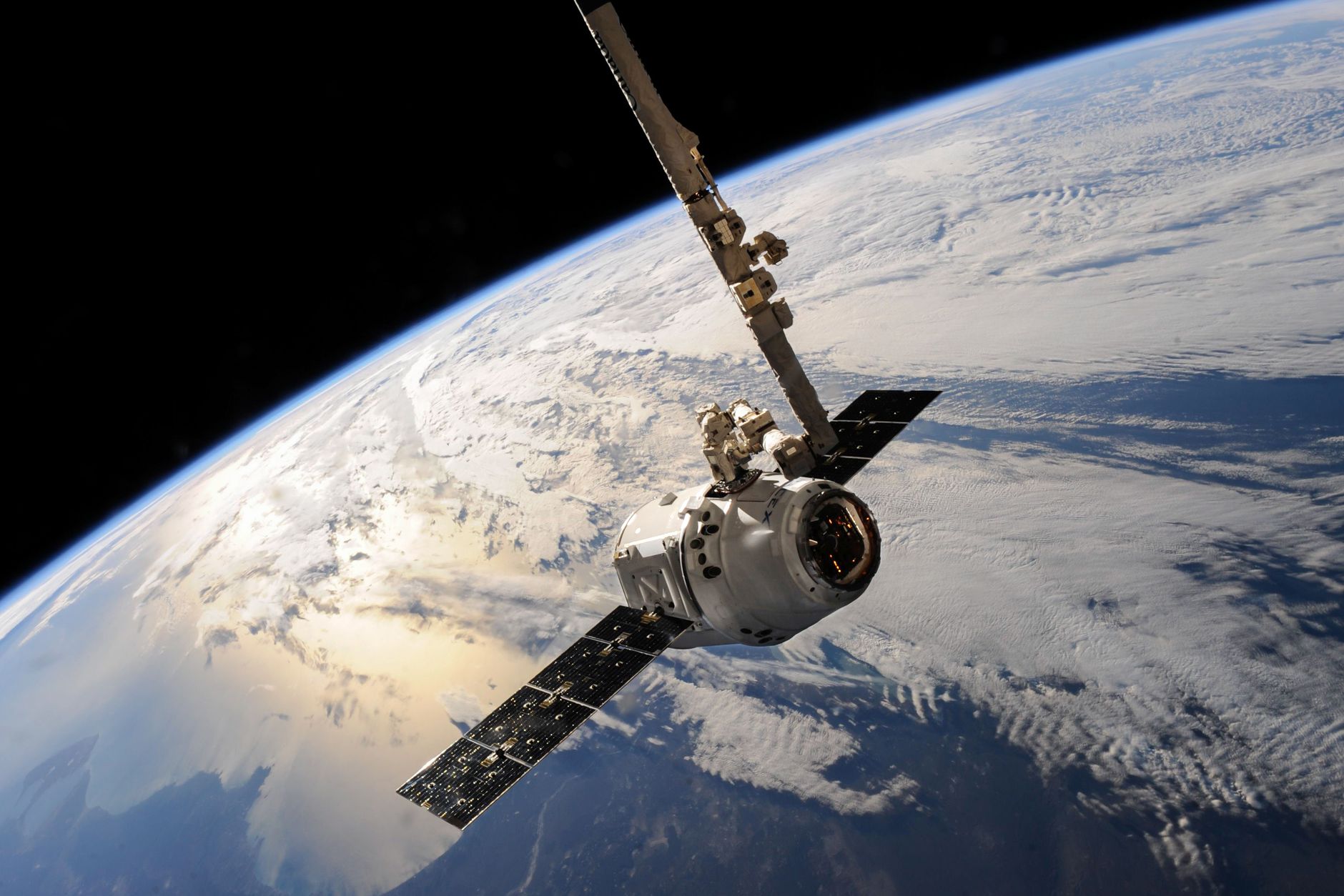
ISRO navigation satellite NVS-03 has successfully launched, showcasing India’s advancements in space technology. This mission is a pivotal step in enhancing navigation capabilities.
Overview of the NVS-03 Mission
The Indian Space Research Organisation (ISRO) has once again demonstrated its prowess with the successful launch of the NVS-03 navigation satellite. This mission is a significant advancement in India’s navigation capabilities, enhancing the accuracy and reliability of satellite-based navigation services.
The NVS-03 satellite is part of the NavIC (Navigation with Indian Constellation) system, which aims to provide accurate positioning information to users in India and the surrounding region. This mission marks a crucial step in expanding the operational capabilities of ISRO’s navigation satellite program.
Key objectives of the NVS-03 mission include:
- Improving the accuracy of navigation services.
- Enhancing coverage in urban and rural areas.
- Strengthening regional security and disaster management efforts.
With the successful deployment of the NVS-03 navigation satellite, ISRO continues to pave the way for advanced satellite technology and applications in India.
Significance of Navigation Satellites
The launch of the ISRO navigation satellite NVS-03 marks a significant milestone in the evolution of satellite navigation systems in India. Navigation satellites play a crucial role in various sectors, including transportation, telecommunications, and disaster management.
These satellites provide precision positioning and timing services that are essential for:
- Transport: Enhancing safety and efficiency in road, rail, and air travel.
- Agriculture: Enabling farmers to make informed decisions regarding crop management and land use.
- Disaster Management: Improving response times and resource allocation during emergencies.
- Telecommunications: Supporting mobile networks and other communication infrastructures.
The successful deployment of the NVS-03 satellite demonstrates ISRO’s commitment to advancing India’s technological capabilities and ensuring that the nation remains competitive in the global space arena.
ISRO’s Achievements in Space
The Indian Space Research Organisation (ISRO) has consistently demonstrated its prowess in the realm of space exploration and technology development. One of the key milestones in this journey is the successful launch of the NVS-03 navigation satellite, which further cements ISRO’s position as a leader in satellite technology.
ISRO has achieved multiple significant milestones, including:
- Launch of the First Indian Satellite: Aryabhata, launched in 1975, marked India’s entry into space.
- Chandrayaan Missions: Successful lunar missions that have garnered international acclaim.
- Mangalyaan: The Mars Orbiter Mission, which made India the first Asian nation to reach Martian orbit.
- Navigation Satellite Programs: The ongoing development and deployment of navigation satellites, including the recent NVS-03, which enhances regional navigation capabilities.
These achievements underscore ISRO’s commitment to advancing space technology and contributing to global navigation systems.
Future of Satellite Navigation in India
The future of satellite navigation in India looks promising with the successful launch of the ISRO navigation satellite, NVS-03. This mission not only enhances India’s navigation capabilities but also positions the country as a key player in the global satellite navigation arena.
As technology continues to advance, ISRO is expected to focus on developing more sophisticated navigation systems that can provide enhanced accuracy and reliability. The integration of artificial intelligence and machine learning into satellite navigation could further improve the performance of future satellites.
Moreover, public and private sectors are likely to benefit from these advancements, as precise navigation solutions can support various applications, including transportation, agriculture, and disaster management.
- Expansion of satellite coverage: Ensuring no region is underserved.
- Enhanced user experience: Providing real-time data and services.
- Collaborative efforts: Partnering with international agencies for improved technology.
Overall, the ISRO navigation satellite program is set to revolutionize how India navigates the future.
How NVS-03 Enhances Navigation
The recent launch of the NVS-03 navigation satellite by ISRO marks a significant advancement in India’s satellite navigation capabilities. This state-of-the-art satellite is designed to enhance the accuracy and reliability of navigation services across the region.
With the integration of advanced technology, the NVS-03 offers several enhancements:
- Improved Accuracy: The satellite provides precise positioning data, crucial for various applications including transportation and logistics.
- Greater Coverage: NVS-03 expands the geographic reach of navigation services, ensuring users across India and neighboring regions benefit.
- Enhanced Signal Quality: The satellite employs advanced signal modulation techniques that improve signal integrity, even in challenging environments.
As ISRO continues to develop its navigation satellite fleet, the successful deployment of NVS-03 underscores the agency’s commitment to advancing India’s position in space technology and navigation services.
Challenges Faced During the Launch
The launch of the ISRO navigation satellite, NVS-03, was not without its challenges. Various obstacles had to be overcome to ensure the successful deployment of this critical asset for India’s navigation infrastructure. Some of the key challenges included:
- Technical Complexities: The integration of advanced technologies in the NVS-03 required meticulous testing and calibration to ensure reliability.
- Weather Conditions: Adverse weather patterns posed a risk on the launch day, necessitating precise timing and adjustments to the launch schedule.
- Coordination Efforts: Effective collaboration among multiple teams was essential to streamline operations and maintain safety protocols during the launch process.
- Resource Allocation: Strategic allocation of resources and personnel was crucial in managing the timeline and achieving mission objectives.
Despite these hurdles, the successful launch of the NVS-03 showcases ISRO’s resilience and capability in advancing satellite navigation technology in India.
Global Impact of India’s Space Program
The successful launch of the ISRO navigation satellite NVS-03 marks a significant milestone not only for India but also for global navigation systems. With this achievement, India strengthens its position in the international space arena, showcasing its capabilities in satellite technology and navigation. The NVS-03 satellite will enhance regional positioning services, offering precise and reliable navigation solutions to various sectors, including transportation, agriculture, and disaster management.
Moreover, the impact of ISRO’s advancements extends beyond national borders. Countries within the Indian region will benefit from improved accessibility to satellite navigation data, fostering collaboration and shared technological growth. The integration of ISRO’s navigation systems with existing global frameworks promises to enhance overall accuracy and reliability, thus contributing to safer and more efficient navigation worldwide.
As India continues to invest in its space program, the global community can anticipate further innovations that will redefine the landscape of satellite navigation.
Next Steps for ISRO After NVS-03
Following the successful launch of the NVS-03 navigation satellite, ISRO is set to embark on several crucial next steps to enhance its satellite navigation capabilities. The organization aims to expand its navigation satellite constellation, ensuring comprehensive coverage and improved accuracy for users across India and the surrounding regions.
In addition to launching more satellites, ISRO plans to invest in advanced technologies that will support the development of next-generation navigation systems. This includes:
- Improving signal strength: Enhancements to signal robustness will ensure reliable navigation services.
- Incorporating new features: Functions such as real-time tracking and improved data integration are on the horizon.
- International collaboration: Partnering with global entities will facilitate knowledge sharing and technology exchange.
These initiatives will not only solidify ISRO’s position in the satellite navigation domain but also enhance India’s standing in the global space community.
The successful launch of the NVS-03 has further solidified the reliability of the ISRO navigation satellite system. This advancement is crucial for enhancing the accuracy and efficiency of various applications reliant on the ISRO navigation satellite.
Photo by SpaceX on Pexels